
A photo shows what your site looked like for one second, from one angle, chosen by the person who took it. It can be honest and still tell you very little.
Most homeowners are offered photos as proof of progress. Photos belong in a project record, but they are supporting evidence, not the evidence itself. Progress is measured against the written scope, not against the camera roll.
What a photo cannot tell you
Whether the work matches the scope. A photo of a finished wardrobe does not show whether the internal configuration, substrate or hardware is what the proposal specified.
What is underneath. The most expensive mistakes hide well: waterproofing under tiles, wiring inside walls, ply under laminate. By the time a surface photographs well, the work that matters most is often already covered.
Whether the sequence was right. A room can look nearly finished while a skipped step can mean rework later. Photos rarely capture order.
What changed. A substitution, a resized cabinet, a shifted point. A photo shows the result, not the decision, and not the cost.
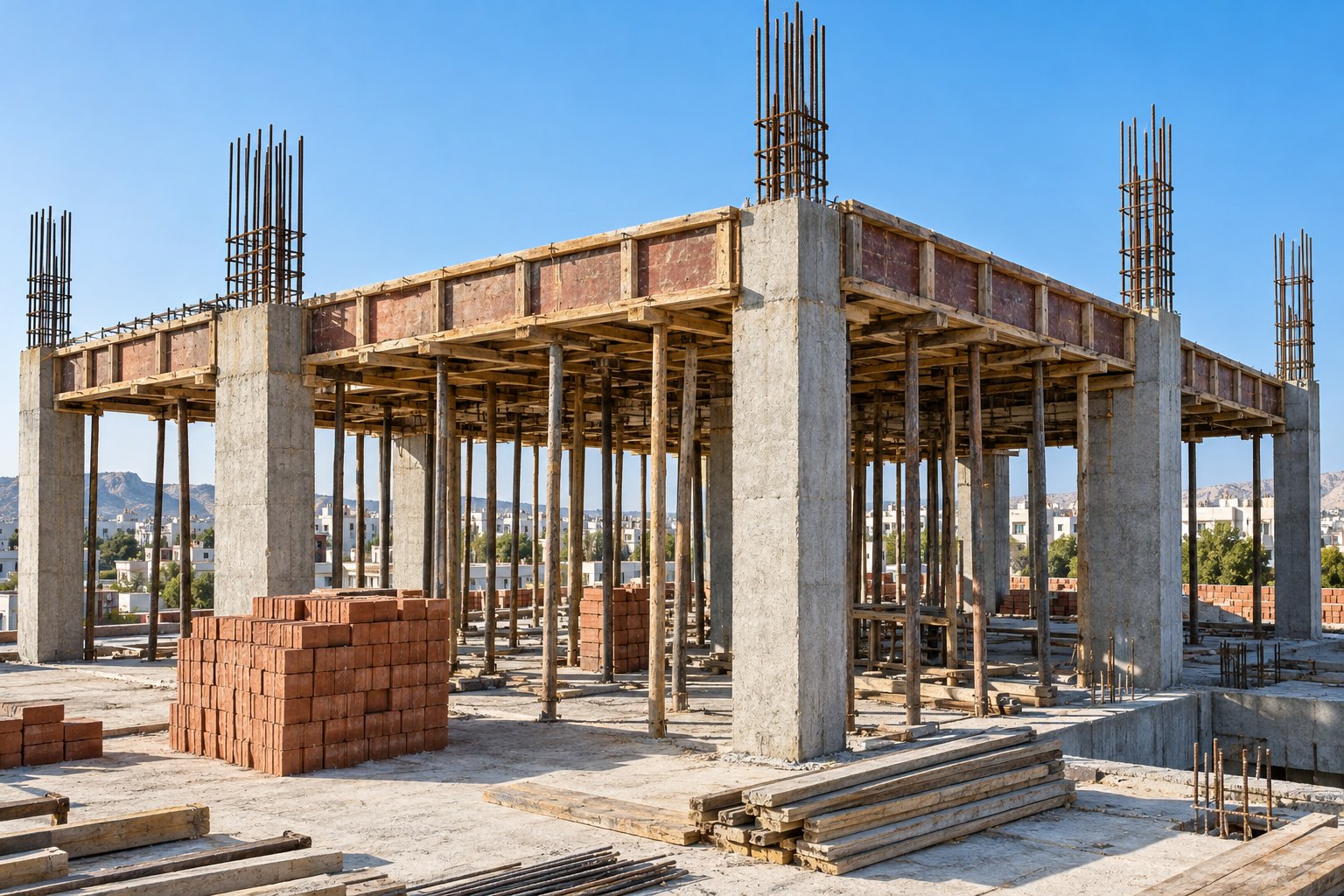
Reinforced-concrete frame construction.
What real verification looks like
Stage checks against the written scope. Each stage closes when the work is checked against what was priced: measured areas, specified materials, listed inclusions. Not against memory or habit.
Verification before cover-up. Materials and hidden work are checked on site before they are sealed behind finishes. After that point, checking them means opening the finish up again.
Measured quantities. Joinery is measured, not eyeballed. The measured area in the proposal and the measured area on site should reconcile.
A decision trail. Every change lands in a revised written scope: what changed, what it costs, who approved it. The record is the progress report.
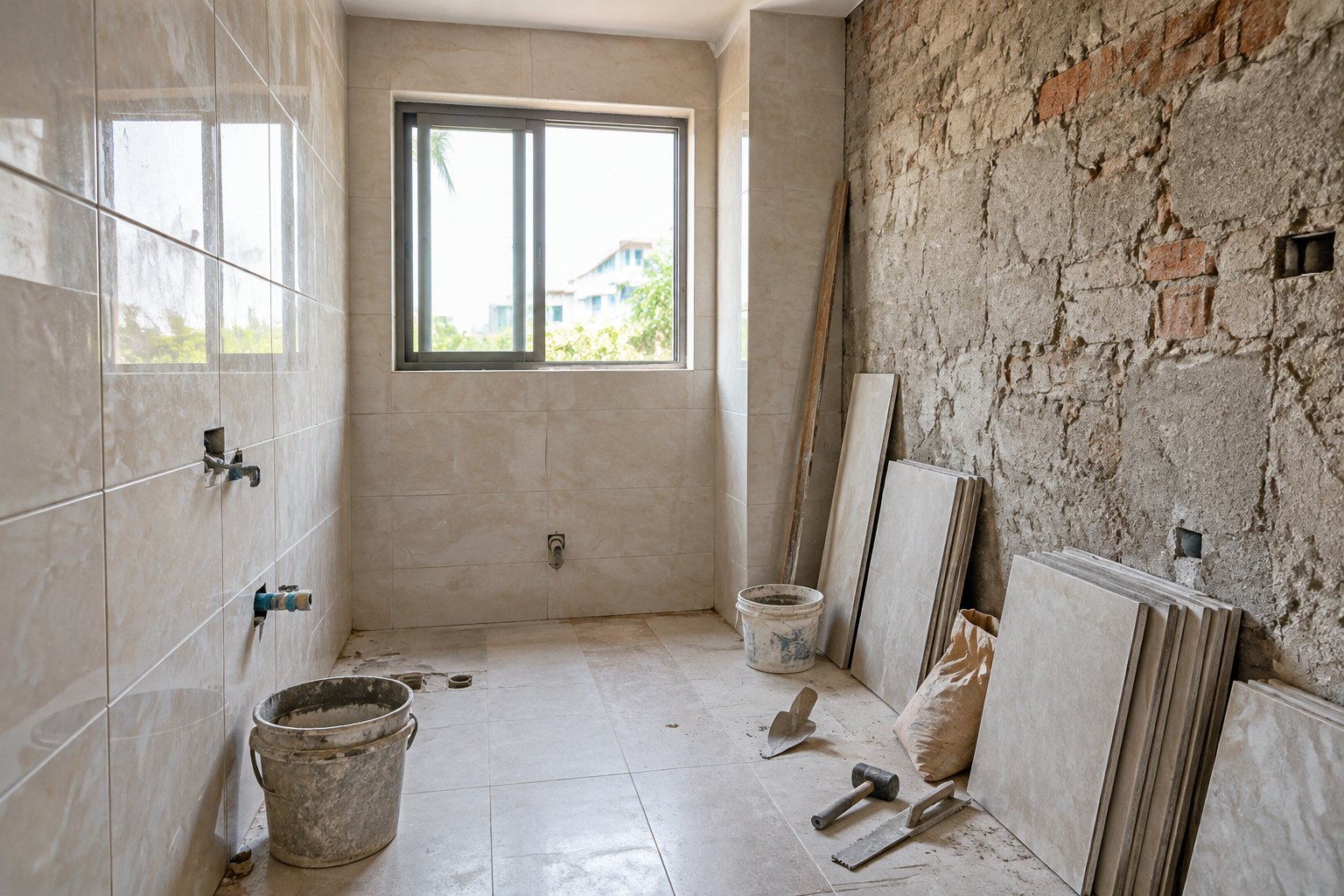
Room renovation.
What you should expect to receive
- Stage-wise updates tied to items in your written scope, not just a stream of images.
- Photos as illustration of a specific check or stage, with context for what you are looking at.
- A revised proposal whenever anything changes, before the change is executed wherever possible.
- A clear point at each stage where you can ask questions and get answers tied to the document.
If a team offers daily photos but no stage record, you are getting activity, not verification.
How Svaara reports progress
Svaara scopes work room by room in a written proposal before work begins, tracks progress against that scope, and shows changes in a revised proposal. Photos support the record; they do not replace it.
Start with a trackable scope
Planning work on your home? Start with a scope that can actually be tracked.
Start your projectSite progress questions
Questions people ask
Are photo updates useless then?
No. Photos are useful for seeing the site between visits and for the project record. They fail only when they are asked to do a job they cannot do: prove that the right work, in the right materials, happened in the right order.
How often should progress be checked?
At each defined stage, and always before hidden work is covered. A fixed daily photo habit matters less than checks at the moments that decide quality.
What should I ask for at handover?
The final scope with all revisions, so what was agreed and what was delivered can be compared line by line, and the finish checked against it.